1. Climate characterisation and variability
We analyse precipitation and temperature using historical datasets and climate projections to identify patterns, trends, and potential future scenarios. The STRIVIng toolbox (Diaz et al., 2019) captures how conditions evolve and how variability affects coffee agroecosystems over time — both gradual shifts and extreme-event frequencies that drive yield and quality.
2. Drought characterisation and hydrological dynamics
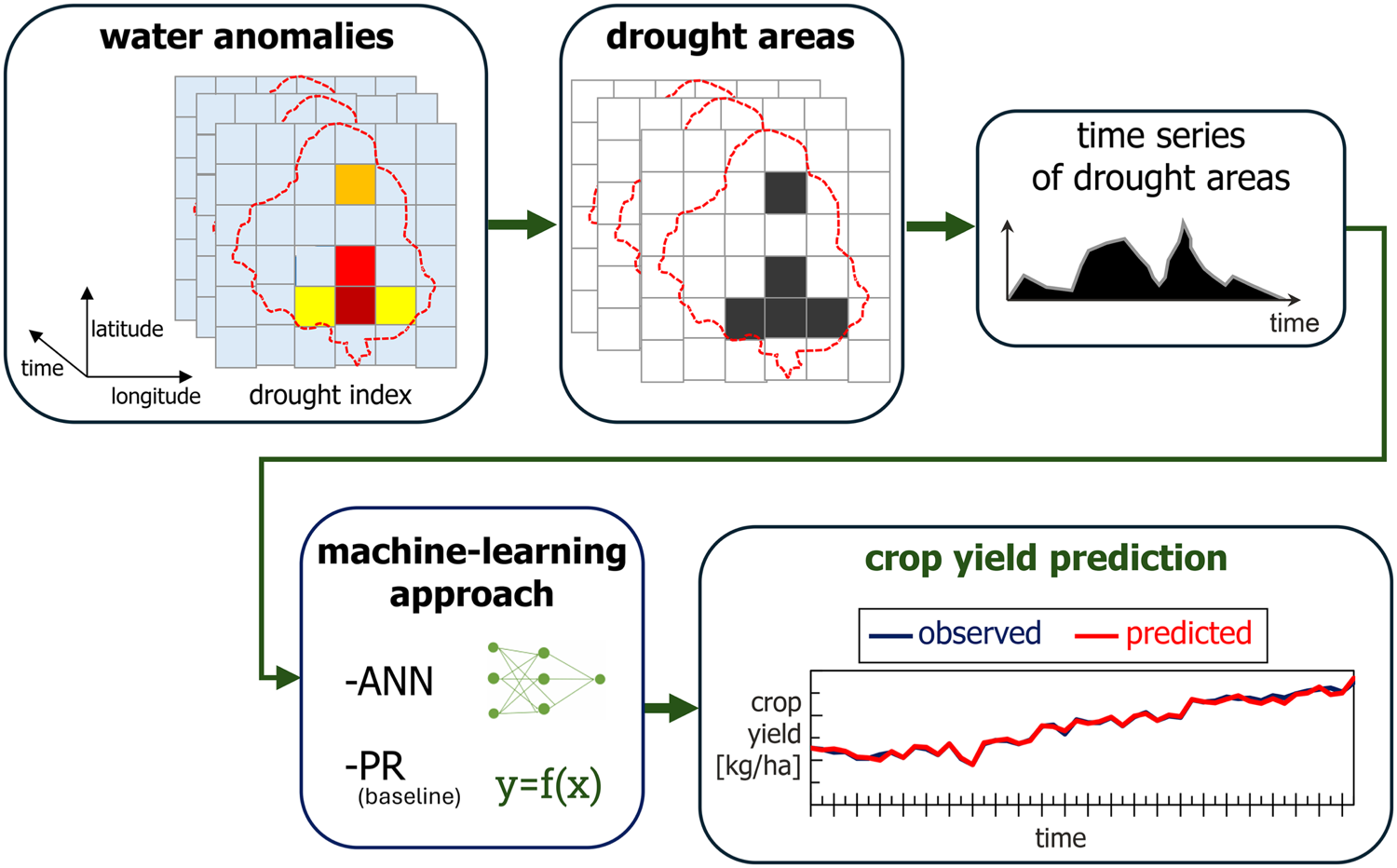
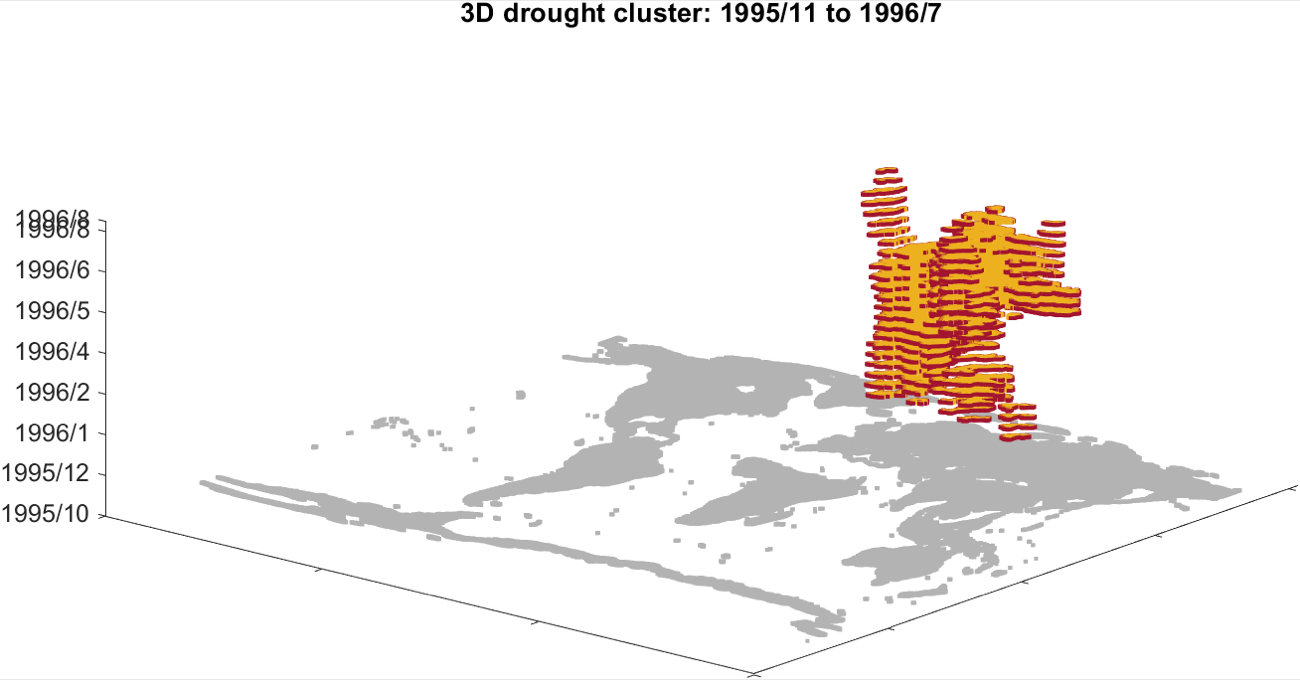
Drought is analysed not only temporally but in its spatial dimension — estimating drought-affected areas simultaneously across territory, which is critical for agricultural planning at regional scale. Soil moisture, runoff, and infiltration are evaluated to link climate variability to real impacts on coffee production. Recent work (Diaz et al., 2026) applies this spatial drought-area approach to machine-learning crop-yield prediction, enabling data-driven early warning.
3. Integrated climate risk assessment
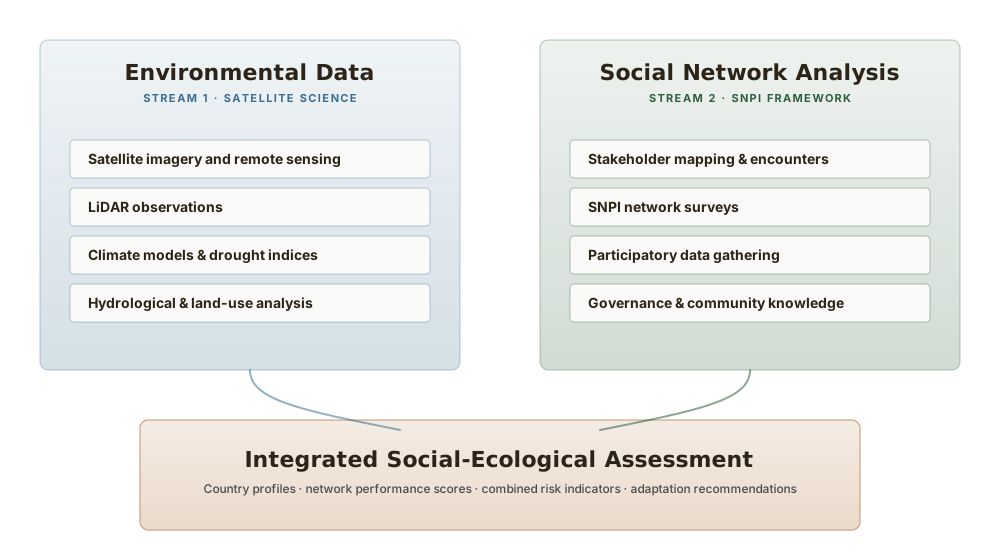
We assess risk across three components. Hazard — the intensity and frequency of drought, heat, and flood events. Vulnerability — land use, environmental conditions, and management practices, together with exposure: which land, assets, and populations sit in harm's way, read from census and cadaster records. And resilience — the capacity to absorb impacts and recover. Hazard and vulnerability follow the IPCC risk framing; resilience is the dimension we add, and it is where the social network evidence enters the assessment. Applied to the Lempa transboundary basin of the Central American Dry Corridor (Koshnazar et al., 2021) — the zone covering major coffee-producing areas in El Salvador, Guatemala, and Honduras — this produces a climate-risk index identifying where interventions matter most.
Agroforestry integration
Coffee across LAC relies on shade management, which regulates microclimate, improves soil structure, and enhances water infiltration. We integrate agroforestry variables into the hydrological analysis so we can compare alternative management scenarios — conservative management, intensified shade, or degradation pathways — and their implications for water regulation and long-term sustainability.