Nuestra dimensión ambiental se sustenta en el marco integrado de riesgo climático, revisado por pares, del Dr. Vitali Diaz. Tres componentes interconectados convierten los datos satelitales y la ciencia hidrológica en evaluaciones listas para la toma de decisiones sobre dónde los sistemas cafetaleros están más expuestos — y por qué.
1. Caracterización y variabilidad climática
Analizamos la precipitación y la temperatura utilizando conjuntos de datos históricos y proyecciones climáticas para identificar patrones, tendencias y posibles escenarios futuros. La caja de herramientas STRIVIng (Diaz et al., 2019) capta cómo evolucionan las condiciones y cómo la variabilidad afecta a los agroecosistemas cafetaleros a lo largo del tiempo — tanto cambios graduales como frecuencias de eventos extremos que determinan el rendimiento y la calidad.
2. Caracterización de la sequía y dinámicas hidrológicas
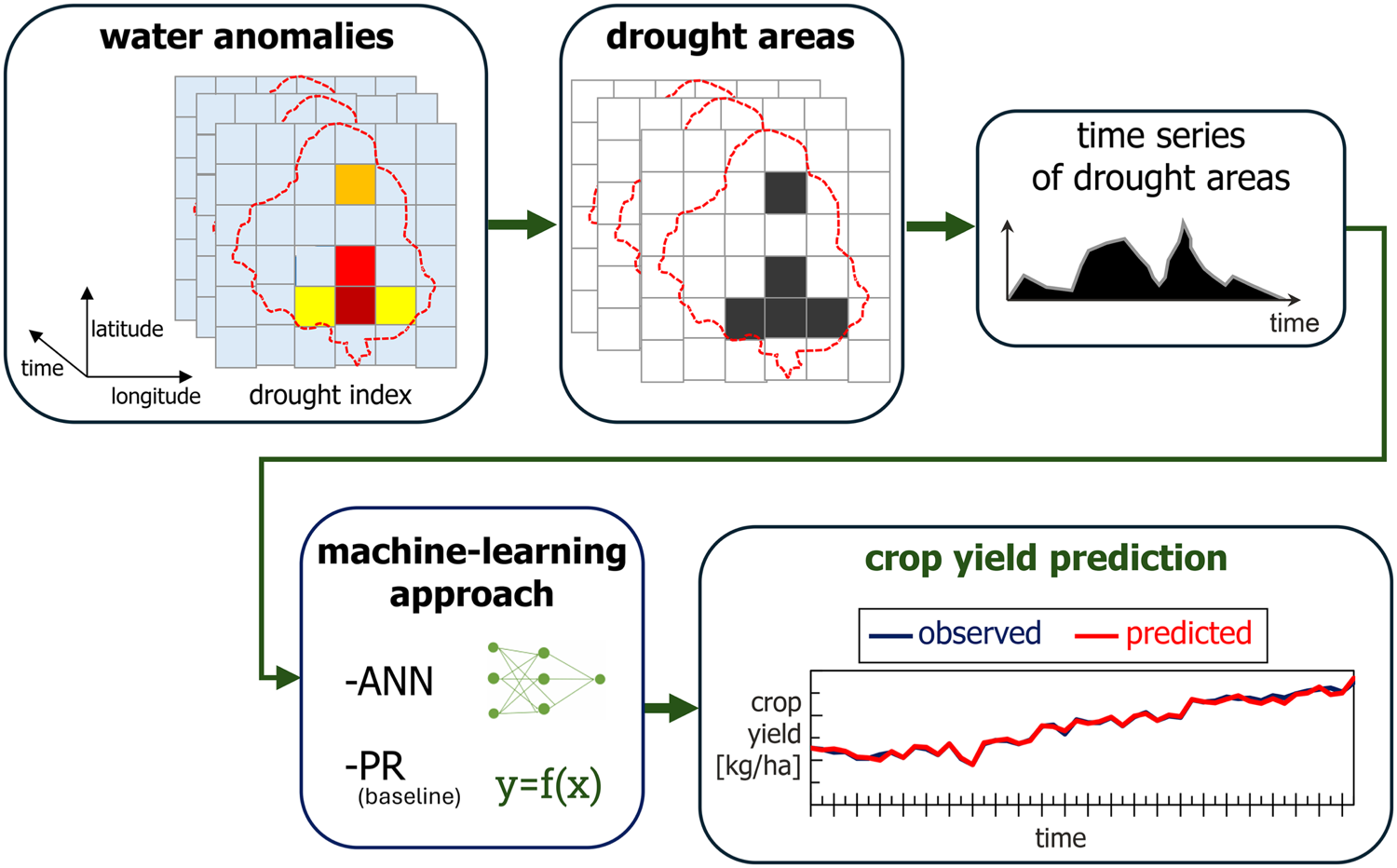
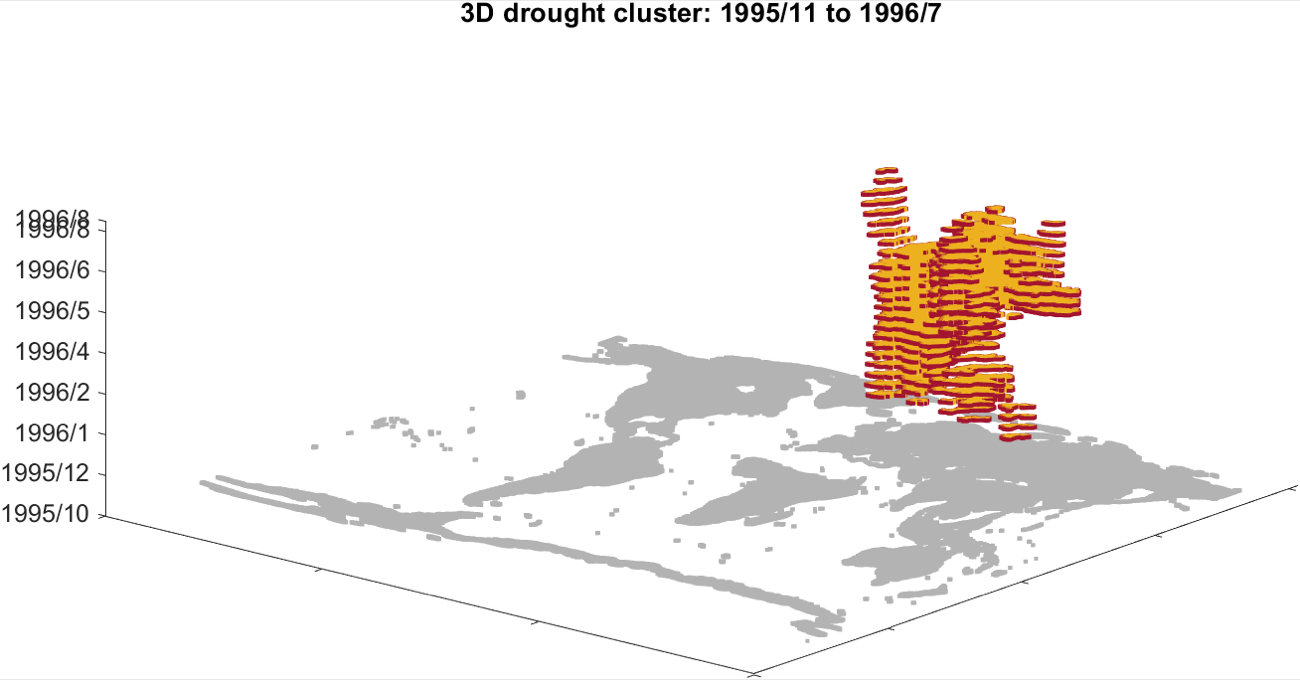
La sequía se analiza no solo temporalmente sino también en su dimensión espacial — estimando áreas afectadas por sequía simultáneamente en el territorio, lo cual es crítico para la planificación agrícola a escala regional. Se evalúan la humedad del suelo, la escorrentía y la infiltración para vincular la variabilidad climática con impactos reales en la producción de café. Trabajo reciente (Diaz et al., 2026) aplica este enfoque espacial de áreas de sequía a la predicción de rendimientos agrícolas mediante aprendizaje automático, permitiendo alertas tempranas basadas en datos.
3. Evaluación integrada de riesgo climático
Evaluamos el riesgo en tres componentes. Amenaza — la intensidad y frecuencia de eventos de sequía, calor e inundación. Vulnerabilidad — uso del suelo, condiciones ambientales y prácticas de manejo, junto con la exposición: qué tierras, activos y poblaciones están en riesgo, leídos a partir de registros censales y catastrales. Y resiliencia — la capacidad de absorber impactos y recuperarse. La amenaza y la vulnerabilidad siguen el encuadre de riesgo del IPCC; la resiliencia es la dimensión que añadimos, y es donde la evidencia de redes sociales entra en la evaluación. Aplicado a la cuenca transfronteriza del Lempa, en el Corredor Seco Centroamericano (Koshnazar et al., 2021) — la zona que cubre las principales áreas cafetaleras de El Salvador, Guatemala y Honduras — esto produce un índice de riesgo climático que identifica dónde las intervenciones importan más.
Integración de sistemas agroforestales
El café en ALC depende del manejo de sombra, que regula el microclima, mejora la estructura del suelo y potencia la infiltración del agua. Integramos variables agroforestales en el análisis hidrológico para poder comparar escenarios alternativos de manejo — manejo conservador, sombra intensificada o trayectorias de degradación — y sus implicaciones para la regulación del agua y la sostenibilidad a largo plazo.